
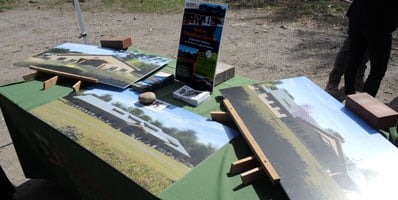
How do you raise money for a building that hasn’t been designed yet?
How Often Should You Visit Your Construction Site as the Owner?

During active commercial construction, plan on visiting your site weekly plus five to six milestone-triggered visits tied to specific phases. The visits that protect your budget are the ones timed to specific construction milestones. Owners who show up weekly during framing but skip the MEP rough-in and pre-drywall phases are present for the work that's easy to see and absent for the work that's expensive to fix. Your contractors will follow the plans as they’ve been agreed upon, but sometimes an owner may discover that something looks different than expected as plans become reality.
What Is Retainage and How Does It Work in Michigan?

Retainage is a percentage of each progress payment that an owner withholds from the General Contractor until the project reaches substantial completion or another agreed milestone. It gives the owner a financial hold to make sure the work gets finished correctly. On commercial construction projects in Michigan, retainage terms are governed primarily by your contract, not by a state-mandated formula, which makes what you negotiate before signing far more important than most owners realize.
How Contract Language Determines Who Pays for Weather Delays
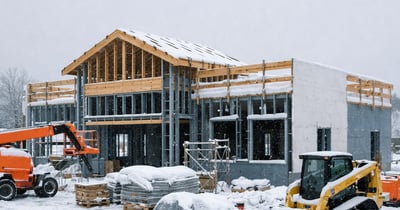
Whether the Owner or the Contractor pays for weather delays on a commercial construction project comes down to four specific contract provisions: the force majeure definition, the excusable versus compensable delay distinction, the notice requirement window, and the liquidated damages clause. Most owners sign contracts that address all four without fully understanding how they interact. Those four clauses, working together, determine whether a weather event adds cost to your project or just extends the schedule.
Why Your Cheapest Bid Isn't Actually Your Cheapest Project

A construction bid and a construction cost are two different numbers. The gap between them is where low-bid projects go sideways. Five mechanisms turn a low bid into a high-cost project: scope gaps, suppressed allowances, change orders priced without competition, subcontractor substitution, and schedule delays that transfer costs to the owner. Owners often don't see these until the invoices start arriving, and by then the contract is signed.
What Causes Restaurant Construction Projects to Fail Inspections?
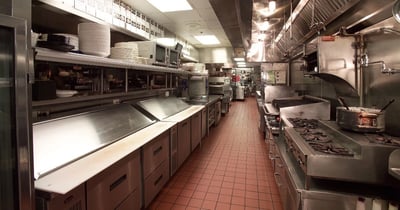
Two restaurant projects can share the same code requirements, the same municipality, and even the same architect and still end up with wildly different inspection experiences. The restaurant construction project that opens on schedule and the one that stalls at final inspection usually differ in something the code books don't cover: who was in the room when the drawings got made, and how the construction team coordinated the pieces that had to come together before opening day.
The Construction Phase Owners Underestimate Every Time
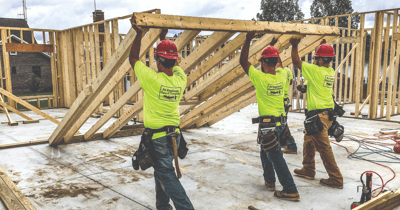
Owner disengagement during active construction, the phase between permit approval and certificate of occupancy, is one of the leading causes of cost overruns on commercial projects. KPMG's 2023 Global Construction Survey, the most recent edition of the industry's largest longitudinal study on project performance, found that only 31% of projects came within 10% of their original budget in the prior three years. A significant share of those overruns trace to owner decisions, or non-decisions, made after the permit was approved. Most owners spend months sweating over design and budget, then go quiet once the permit is approved. That silence is exactly where commercial projects lose time and money.
Michigan K-12 Schools: Understanding Design-Build
Since March 2025, Michigan School Districts have officially had the option to use Design-Build construction delivery for school building projects under House Bill 4603, now known as Public Act 67 of 2024. This legislation marked a significant change in how K-12 Districts can approach facility construction and remodeling projects throughout the state.
Why Michigan Permit Timelines Vary So Much by Municipality

Two nearly identical commercial projects, same building type, same square footage, same use. One gets a permit in three weeks. The other waits four months.
Should I Hire a Local or National Contractor for My Michigan Project?

The contractor you choose shapes your budget, your timeline, and your working relationship for the next 12 to 24 months. Most business owners don't realize how much that choice depends on where the contractor is based. For most commercial projects, a qualified local contractor will outperform a national firm on responsiveness, subcontractor relationships, and post-project accountability. The exception is projects requiring multi-state locations, highly specialized certifications, or bonding capacity that exceeds what regional firms carry.